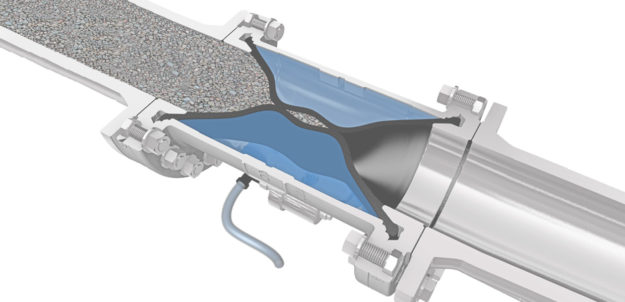
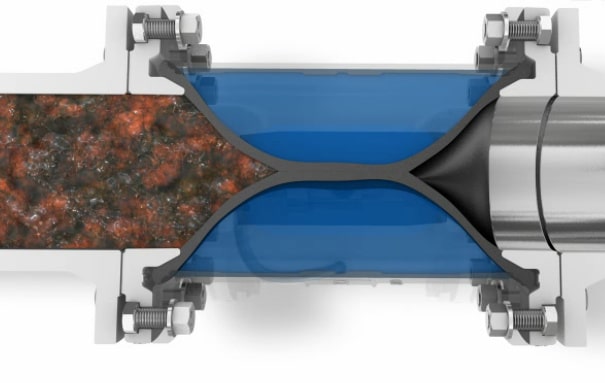
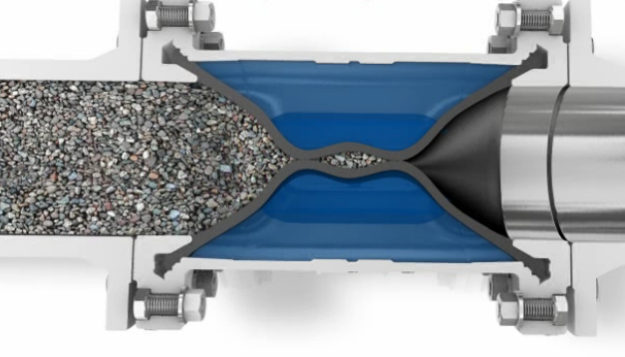
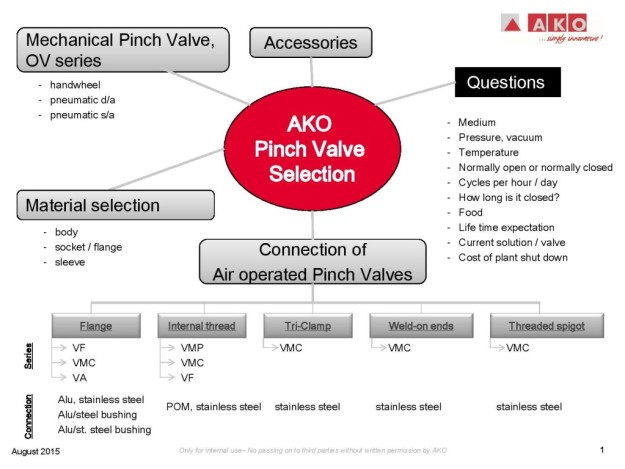
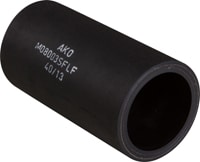
The rubber membrane liners of the air operated pinch valves are usually press-fitted and centered into the housing ends by the socket end covers or flange.
A rubber membrane may also be known or nicknamed as a Hose, Bladder, Membrane, Seal, Seat, Tube, or Sleeve.
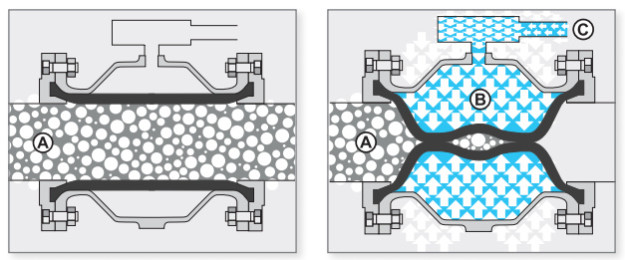
Here is a comprehensive explanation of how soft seated valves work, and how their exceptional design helps them to stop and allow the flow of fluids in an efficient manner.
Shut off valves can be described in a number of different ways, for instance the way they close – either by a metal gate, a rubber hose pinching, a ball turning, or a swiveling disc.
All types of shut off valves intend to do the same job, which is to close off the flow of a product whether it be gravity fed or pushed along using compressed air.
But which valve type is most suitable for the application being used?
One of the most widely used types of air flow valves is an air operated pinch valve. These valves are known for being highly reliable and cost effective when it comes to controlling the flow of solids, fluids, and slurries. Pinch air flow valves are the best choice for applications involving abrasive and other challenging materials.
Pinch Valves (also commonly nicknamed as squeeze valves, bladder valves, rubber hose valves, soft seated valves, hose valves or shut off valves), are made up of only 3 components.
These include the housing or body, end connections, and a rubber sleeve that fits inside.
This information sheet should help users to determine which Pinch Valve to use for your application, but as always, if you need help or would like to discuss your application with our UK sales team please get in touch.
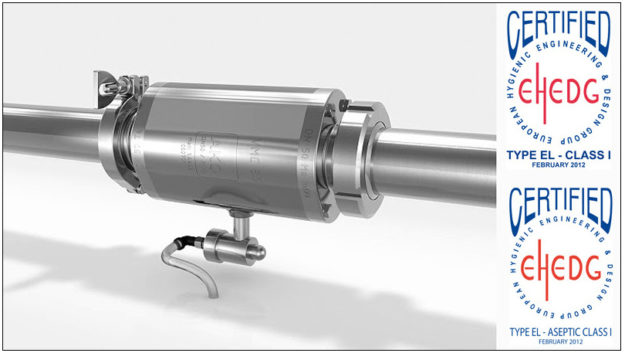
AKO UK has passed the certification Type EL-Class I and Type EL Aseptic-Class I” of the European Hygienic Engineering & Design Group EHEDG for their new Air operated Pinch Valves type VMCE.
We use cookies to ensure that we give you the best experience on our website. If you continue to use this site we will assume that you are happy with it.