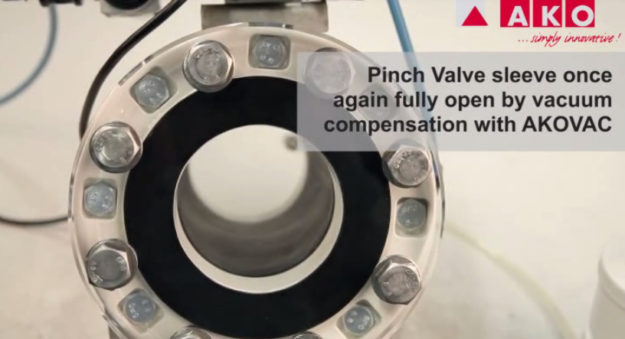
Pinch Valve vacuum technology puts great emphasis on the quality of the components and reliable functioning of pinch valves. Shutoff valves in vacuum systems are subject to several special requirements, apart from the general shutoff elements and their technical aspects. With pinch valve vacuum, the additional demands are met only when right shutoff devices are installed, taking into account the method of construction, operation, and size suitable for each application.
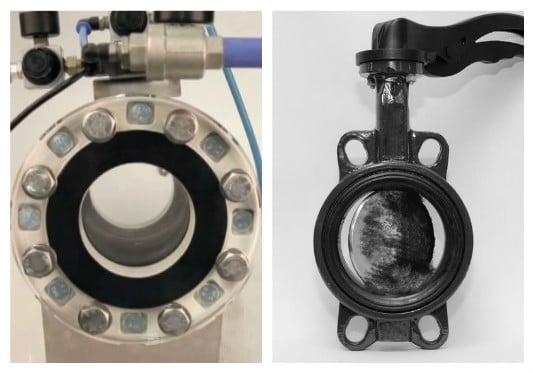
Controlled filling systems using butterfly valves are occasionally used on silo safety systems, but the flow through the valve is restricted by the butterfly disk, slowing down the filling process. The valve seat becomes contaminated with trapped product, resulting in spillage, waste and cross-contamination. The butterfly disk also wears very quickly increasing maintenance down time.
The use of a pinch valve eliminates these problems immediately.
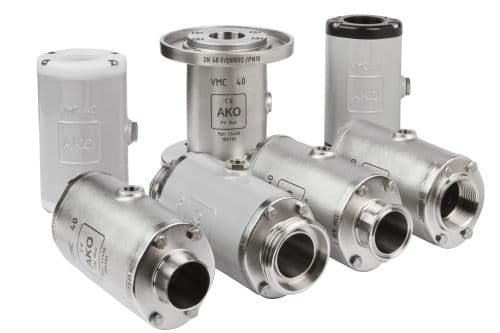
Valves for food are devices that are carefully designed while keeping in mind the stringent demands of industrial applications where cleanliness and sterility are essential, such as the food and pharmaceutical industry. Each component is made using materials that ensure efficient sanitizing and cleaning, giving users the confidence that the processing environment in their industry is free from any kind of contamination.
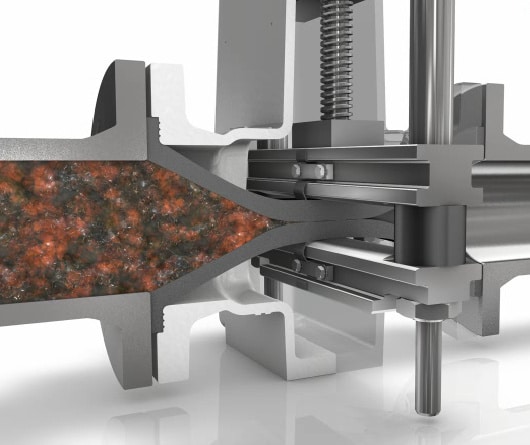
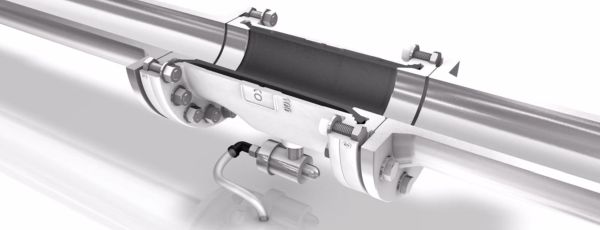
Wear resistant valves comprise of a rubber pinching tube inside the valve body that helps in controlling the flow of media. They have a robust construction and are very economical, which is why they are used in a wide range of industrial applications. The rubber sleeve is made up of high quality natural rubber and is the only part that needs to be replaced. Moreover, these wear resistant valve types require little to no maintenance and can be retrofitted in almost any application.
Manually actuated low clogging valves offer multiple features including maintenance-free operation, reliability, and cost-effectiveness. They are engineered to handle tough abrasives, slurries, and corrosive chemical flow media. The best part about manual low clogging valves is their 100% full port design that eliminates any crevices or dead spots in bearings or seats, where there is a possibility of slurry hanging up and impairing the entire operation, or in worst scenarios, cause complete valve failure.
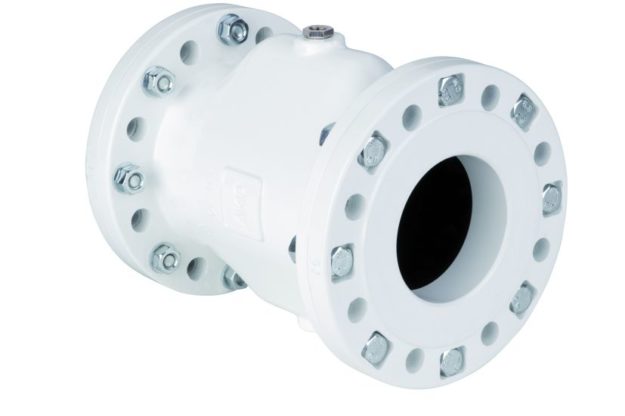
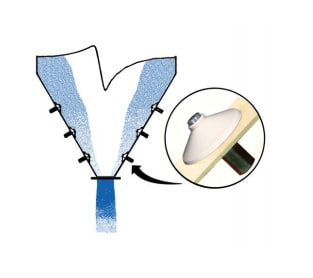
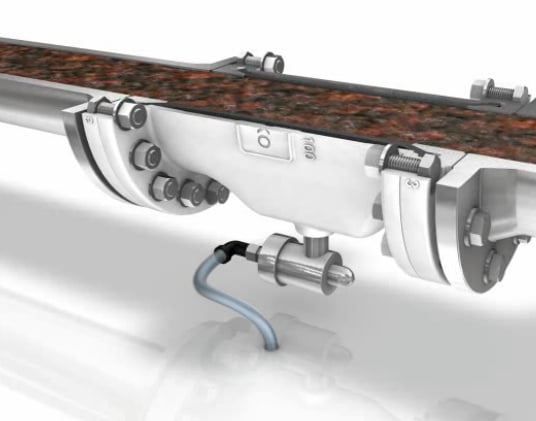
While the Portasilo Pressure Relief Valve ultimately gives complete silo safety, the valve for powders by AKO helps to protect the environment by also helping to avoid over filling. Using a full bore 100mm diameter valve for powders with a pinching rubber sleeve allows unrestricted product flow. Tanker discharge time can be effectively reduced by more than 10%.
The Pinch Valve flow characteristics are inherent to the design of the valve. For instance, as the valve is opened, the flow characteristic allows a certain amount of media flow through the valve bore at a particular time. This is especially important for the choke/throttle control of the pinch valve because it controls the flow of media in a predictable manner.
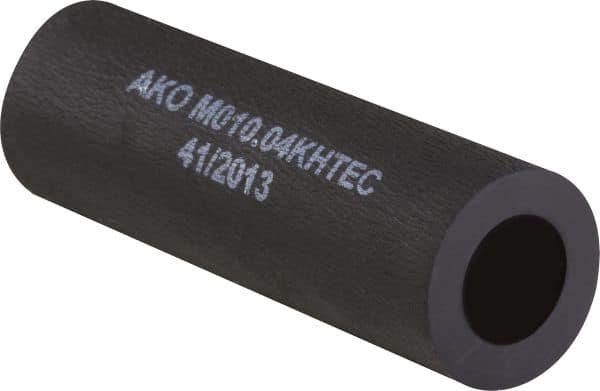
The Pinch Valve liner (also known as sleeve, hose, tube, diaphragm, bladder, rubber membrane etc) is the only wetted part to a Pinch Valve, making it the only part that needs replacing. The liners do need replacing and servicing from time to time, but because they are the only part that need replacing, this makes the total cost of ownership of a Pinch Valve much less compared to other valve types.
Bulk valves with a pinching rubber sleeve close tightly, whatever the product you are conveying. They are the ideal solution for handling bulk solids and liquids, and even the most abrasive media without wearing the rubber sleeve/hose. These pinch bulk valves are proving to perform better than conventional valve types such as ball valves and butterfly valves where the disc or seals can become clogged or damaged.
We use cookies to ensure that we give you the best experience on our website. If you continue to use this site we will assume that you are happy with it.